Steffani Jemison at Lafayette Anticipations
This interview was conducted on the occasion of Steffani Jemison's current exhibition at Lafayette Anticipations in Paris, a body of work developed in close dialogue with the institution during her residency and shaped by its distinctive architectural and atmospheric conditions. Moving across sculpture, video, silvered glass, and choreographic structures, the exhibition weaves together histories of insurrection, revelation, and embodied knowledge, tracing non-linear currents between past and present. As this conversation reflects, the questions animating the show also extend beyond it: in January, the artist will further activate these concerns in a forthcoming performance at the Centre Pompidou, where movement, voice, and collective attention will once again become sites of inquiry and transformation.
Your exhibition begins with the historical moment of Nat Turner’s eclipse-vision in 1831. Expand on how you decided to anchor the work in that moment, and what does that event open for you conceptually?
I no longer remember when I first read The Confessions of Nat Turner—probably as a university student, maybe in the incredible African American literature course I took with scholar Marcellus Blount—but I’ve returned to it countless times since the first encounter. It is truly one of the foundational texts of my practice. I’m fascinated by the series of visions that signaled revolution for Nat—first, the writing and drawing he encountered while working in the fields that prophesied his political leadership, then the celestial events he observed that indicated to him that the timing for his project was right. I think about how the moon illuminated the small crew Nat assembled to lead his insurrection, and how powerfully the eclipse would have impacted their gathering. I think about how short the moment of passage feels—just five minutes, easy to miss if you happen to be asleep or even indoors—and how differently the history of Virginia might have unfolded without Nat as a witness to these critical seconds. I think about our longing for experiences of revelation—in which the truth is laid bare, unveiled. I think of these as fantasies of exposure, where what is exposed is the innermost secrets of the world itself. I am interested in revelation as a spiritual, intellectual, and especially somatic experience—something you feel as a tingle in your spine or a punch in your gut.
You draw lines from the insurrections in 1831 to those of 1967 in various U.S. cities. Did you find any unexpected resonances across time when researching this?
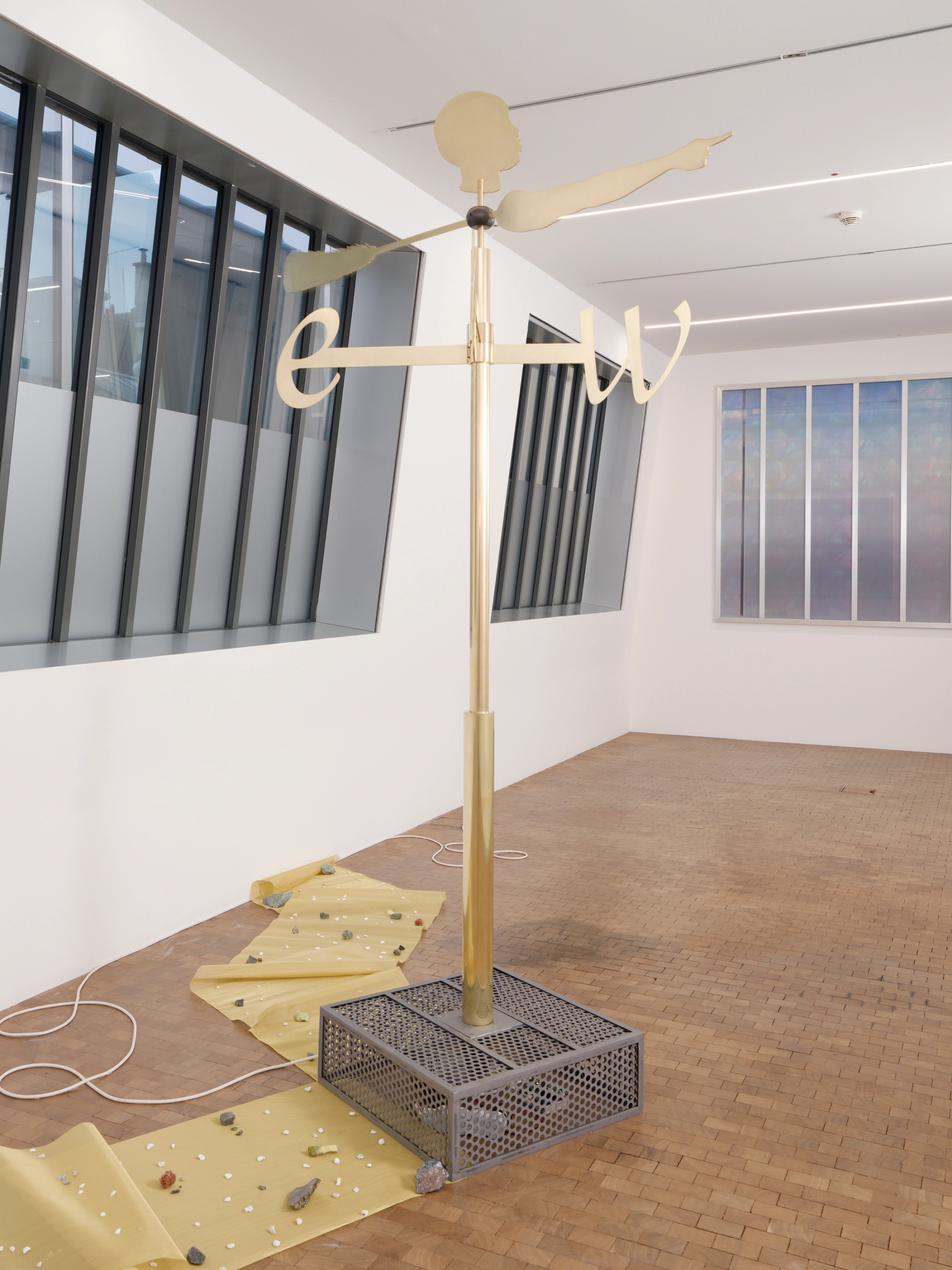
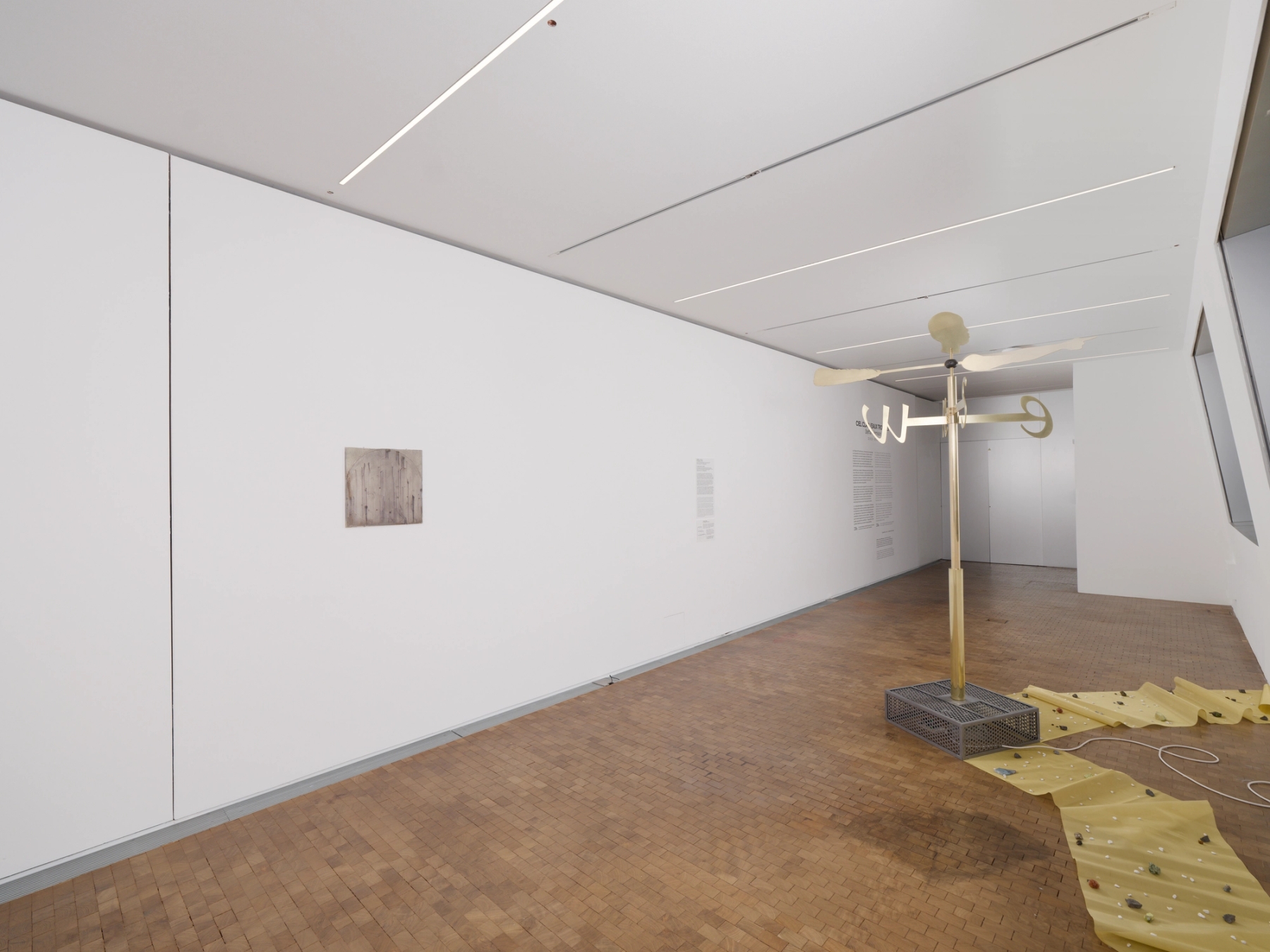
As I developed the weather vane, I knew I wanted that pointing arm, the silhouette’s gaze, to choreographically perform a historical moment that speaks not to a singular moment of protest, but rather to an extended moment of political possibility. The “long, hot summer of 1967” was a response to black American dissatisfaction with the banal, everyday indignities and aggressions that characterize life in the city. I am fascinated by the uncontainability of this unrest, the way it spread from city to city like a hot, political virus. If resistance is contagious, like some kind of affective infection touching first one person, then another, it becomes a permanent threat that can never be fully suppressed, only temporarily controlled.
Your work uses movement and language as “tools of material and spiritual research.” Explain how you explore these dimensions and was that always a cornerstone in your studio practice?
I grew up writing poems and short stories while competing as a gymnast; it was only years later that I began to understand writing as an embodied practice and athletics as a creative practice. My creative work has also been deeply influenced by my family—especially my father’s father, a preacher, whom I often saw writing sermons on a legal pad during the week that were danced, screamed, sung on Sunday. In university, I studied scholars like Amiri Baraka, who wrote about the relationship between music, literature, and visual art in black culture; and Roland Barthes, who described the grain—the body—of the voice.
By the time I reached graduate school, I had begun working with improvisation and collaboration as artistic strategies, especially in video. I was especially focused on the relationship between writing, drawing, and gesture. The video Sensus Plenior, which was commissioned by Osei Bonsu for Jeu de Paume in 2017, condensed many of these interests: I worked closely with Reverend Susan Webb, a mime minister who uses gesture and choreography to interpret gospel music. I continue to work at this intersection; as evidenced, for example, by my persistent interest in the phenomenon of revelation—revelation as simultaneously a way of knowing, as the knowledge itself, as a feeling, as an embodied experience, as a spiritual experience.
Working with atmospheric forces suggests something generative, unpredictable. How do you hold tension between control (as maker) and letting loose (as process), generally?
I am fascinated by the concept of “freedom” as a fantasy that animates many disparate threads in European and American thought. In tension with this, I think a lot about the many ways in which our activities are scripted—by everything from history to the law to etiquette to the weather. Our participation is always imperfect. Sometimes we wake up and choose violence. There is always friction. It produces sparks, like fireworks.
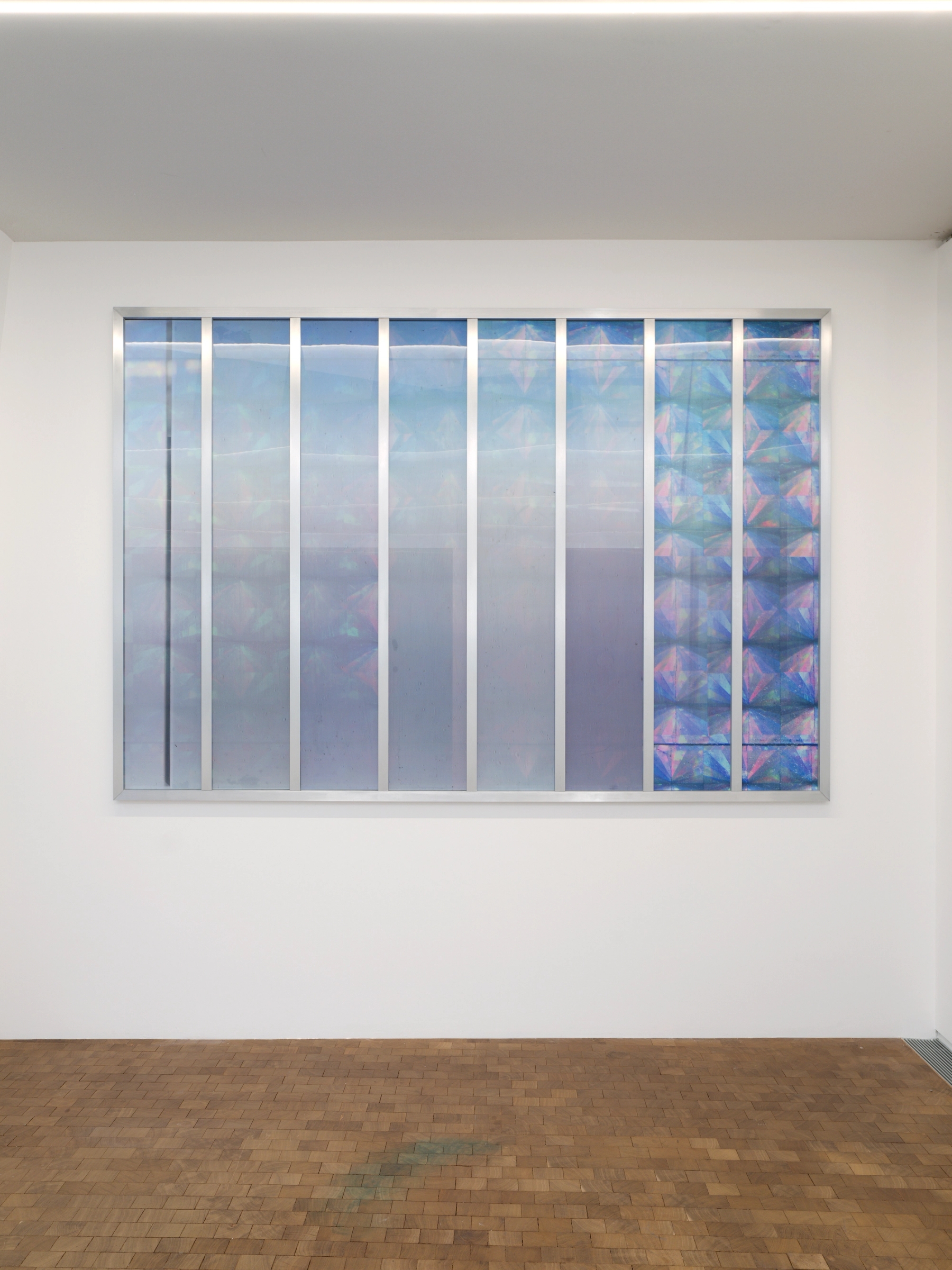
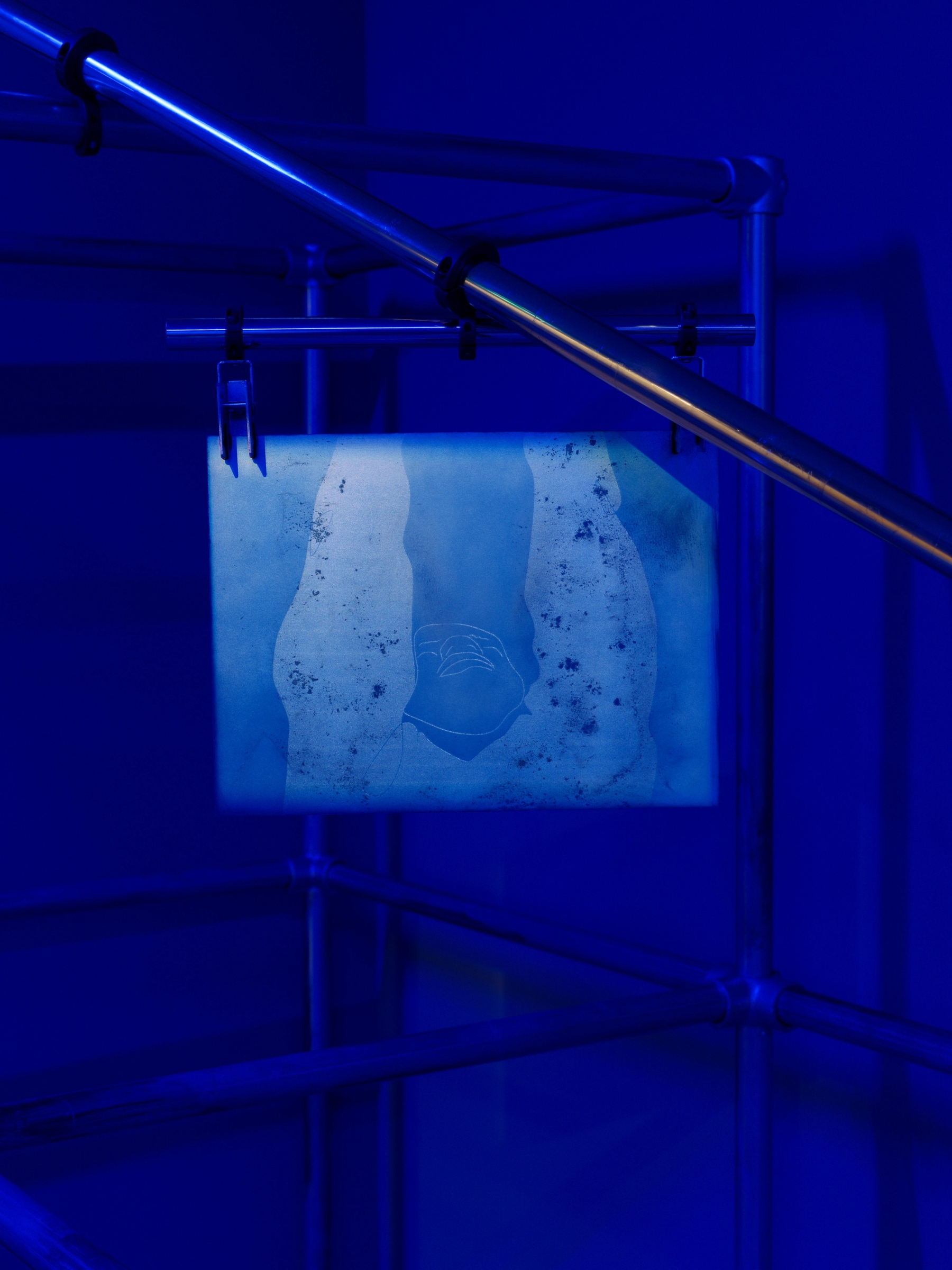
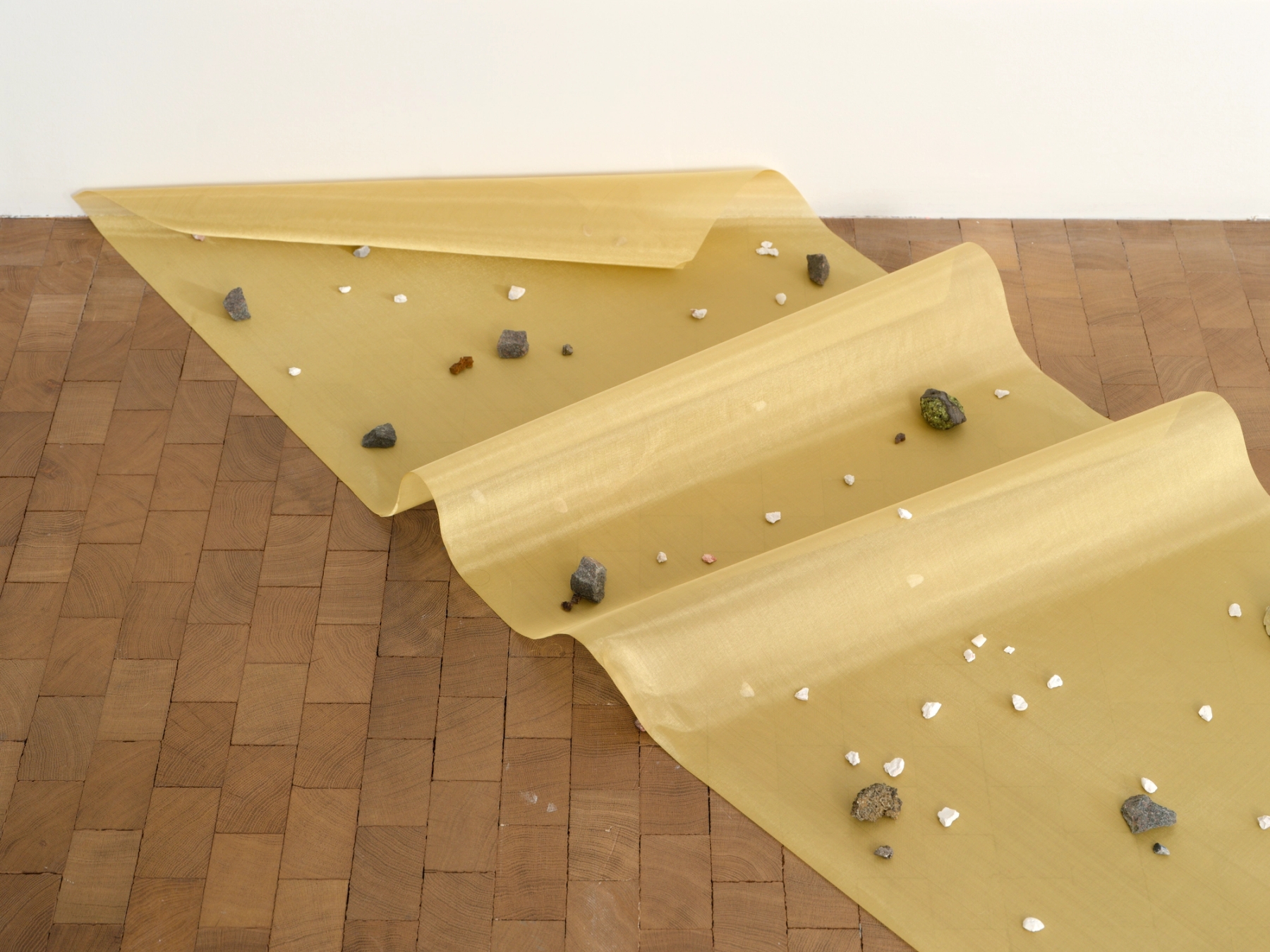
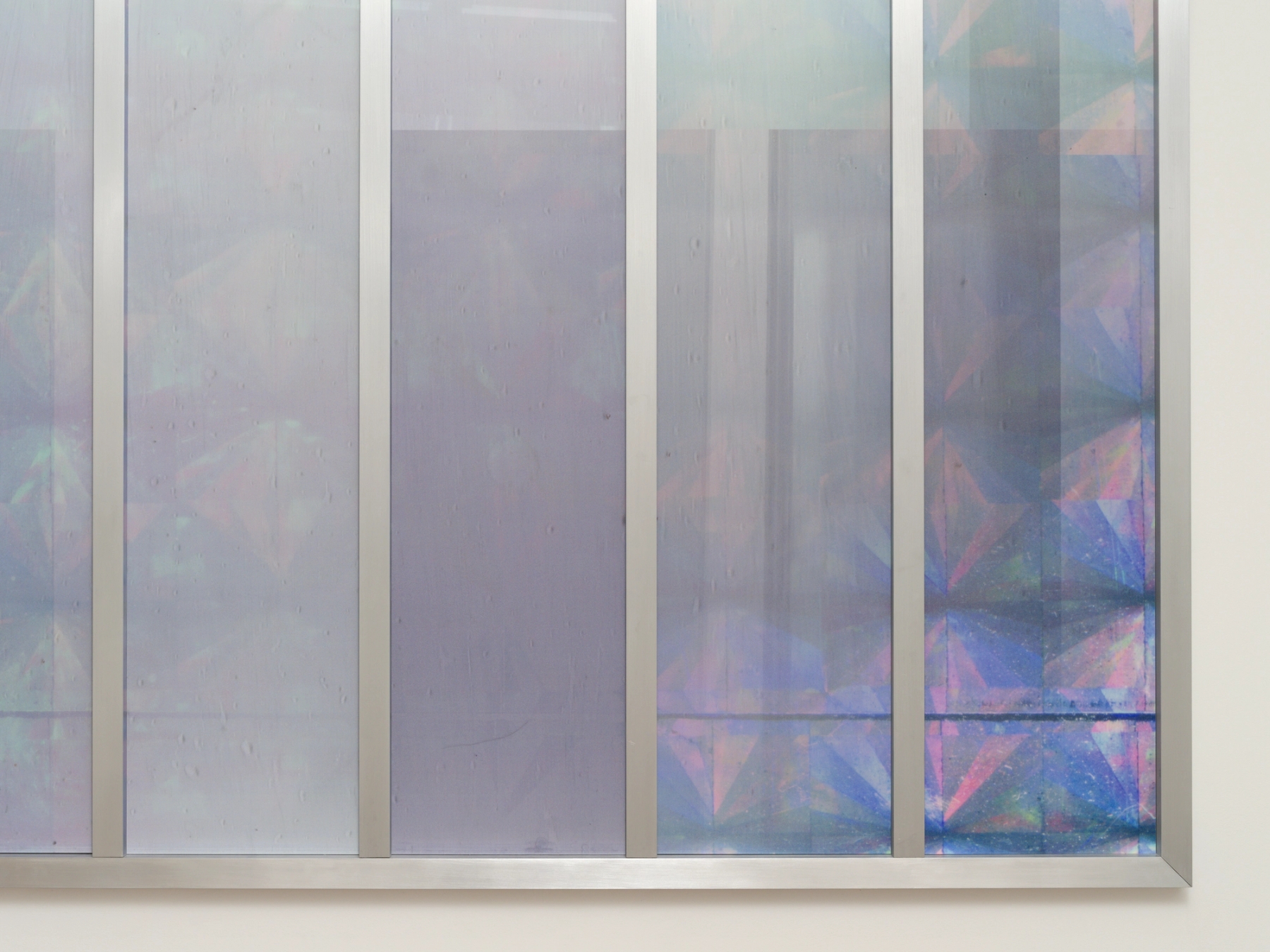
The silvering process requires the maker to stage a very particular sequence of chemical events—it’s quite physical and material, I think of this almost as like a performance—that are inevitably complicated by contingencies as tiny as a slight shift in room temperature. In the end, the process of making these works feels very much like improvisation, like performance. When I look back at the work, it almost feels as though these sparklers are recorded, indexed in the glass.
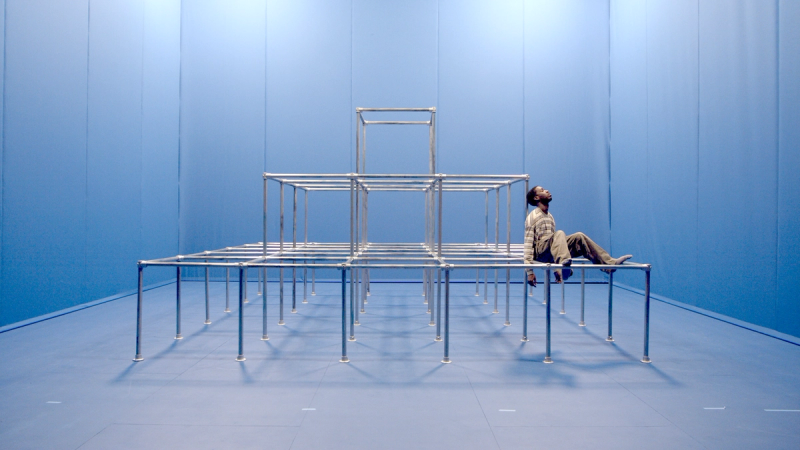
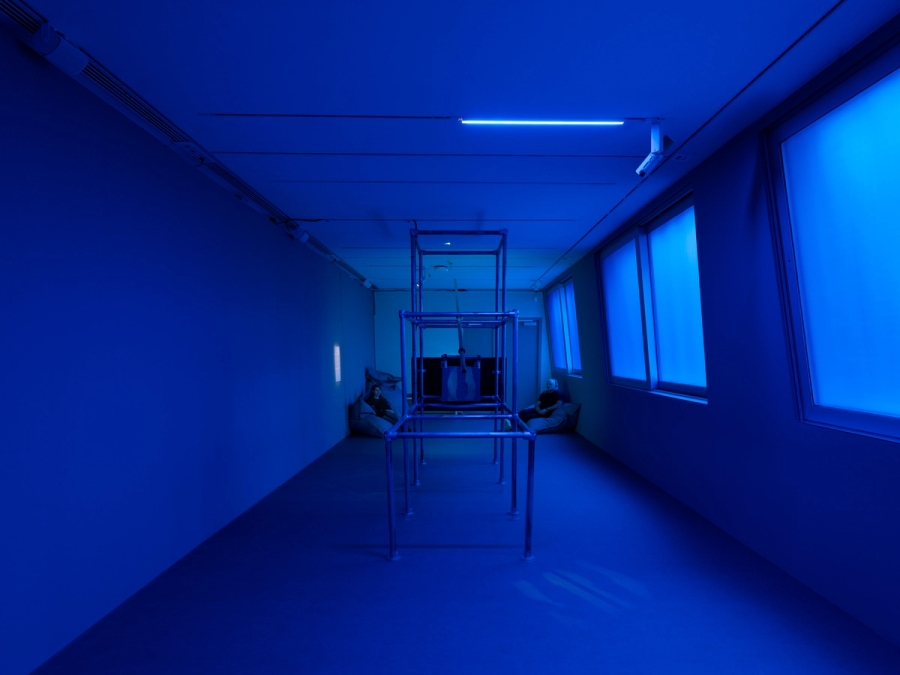
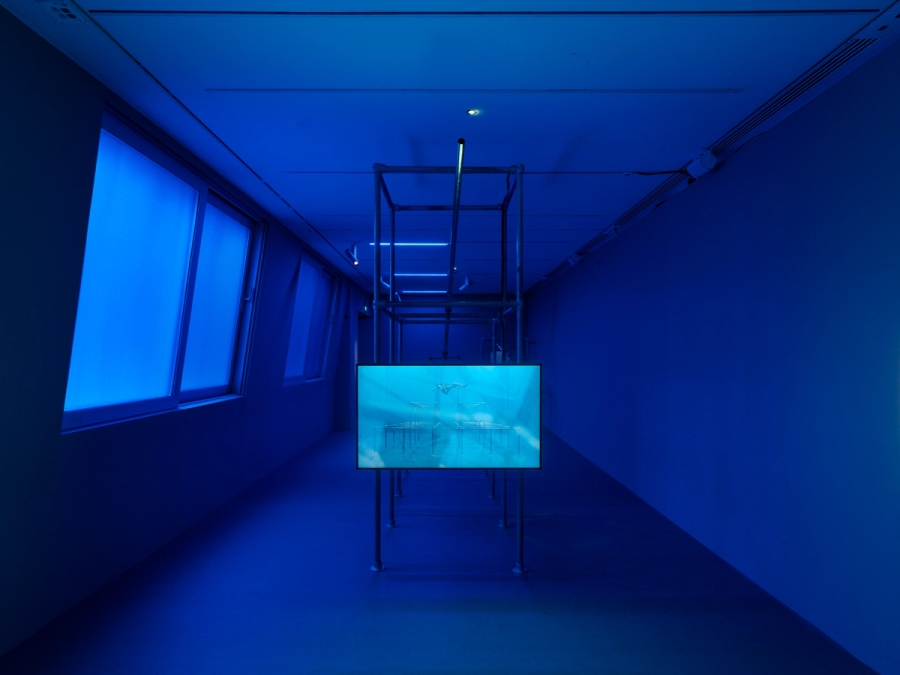
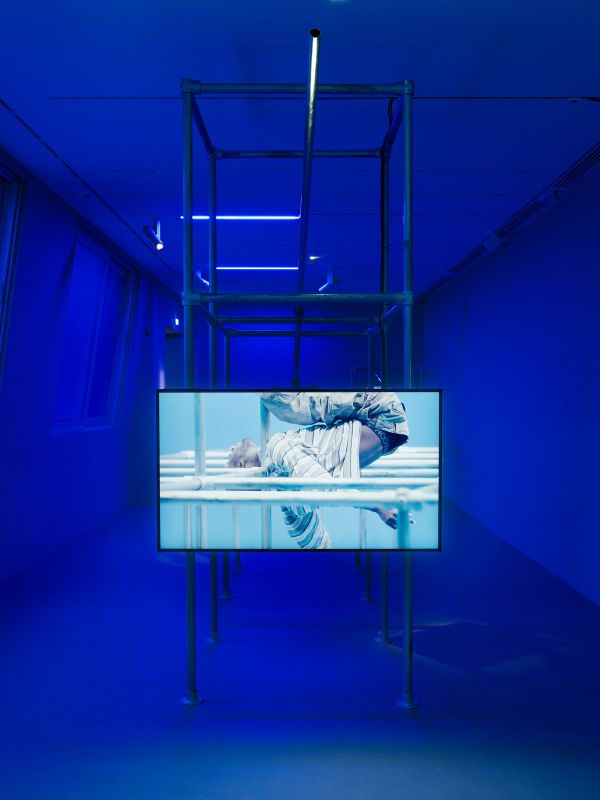
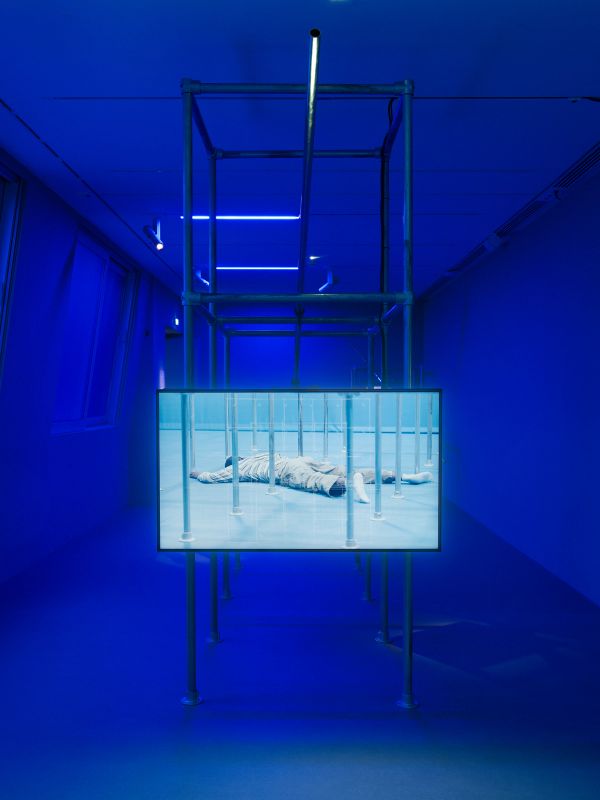
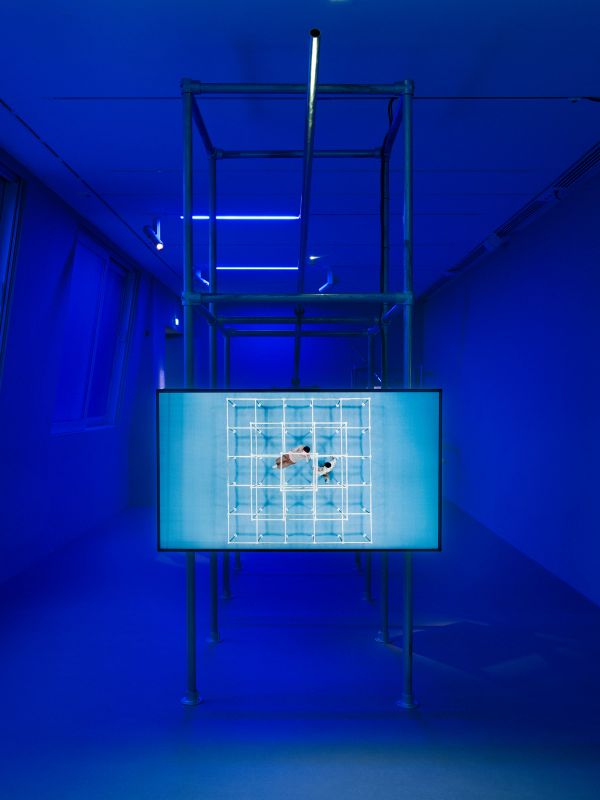
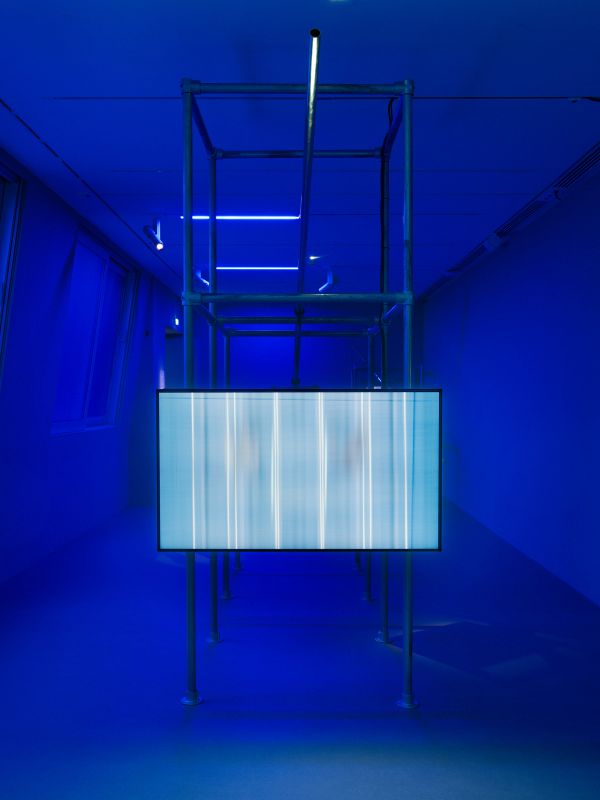
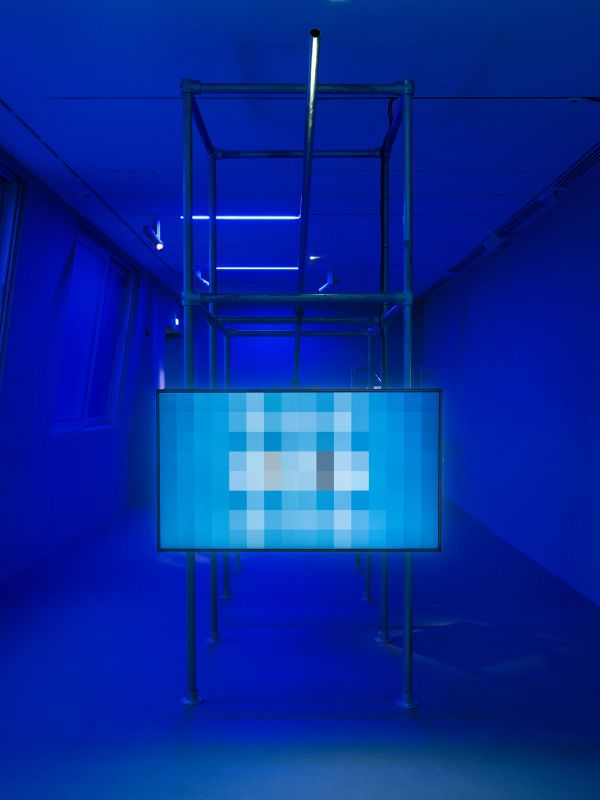
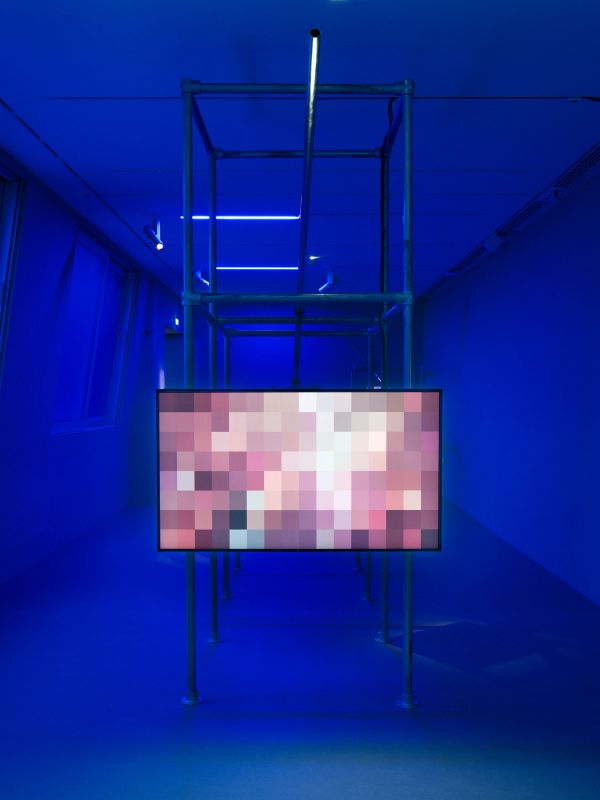
In the video Bridge, the jungle gym sculpture—a kind of extruded grid—itself forms a movement score, organizing the way JaLeel and Ke’Ron reach for support, find strategies to navigate and connect, find temporary moments of balance or respite.
You live and work in Brooklyn but engage deeply with histories of American insurrection and migration. How does place - your current city and your historical reach - influence your sense of audience and exhibited work in Paris?
I was lucky to spend much of last year in Paris, first as a resident at Art Explora, and later as a resident at Lafayette Anticipations, where I produced the silvered glass works and weathervane in the show. I spent time in Paris before, most significantly several months in 2017 in preparation for an exhibition at Jeu de Paume.
I did think quite a bit about how French audiences would interact with the bodies of work on view. On a conceptual level, I wanted to ensure that the silvered work in particular drew from a wide range of historical references that were not limited to American race relations; after all, the history of colonization and chattel slavery began in Europe and is rooted in European values. On a practical level, this affected my choice to use an internationally-familiar song as the foundation for the video, as well as the decision not to use dialogue in the soundtrack.
The exhibition text describes emancipation “not as a linear path, but a winding one.” How does that non-linearity show up for you? Formally, or else
I am always searching for ways to evoke our experience of “change” without resorting to a narrative idea that things are moving in a direction, that they’re getting better or worse. I look for methods and structures that rely on non-narrative forms: repetition, evasion, accumulation, relay. My work is profoundly committed to experimentation—I fear that almost everything I make is at the risk of materially or socially disintegrating, falling apart—which perhaps serves as the most important model for the political restlessness, the instability I feel.
I choose subjects that test my ideas about this. The cyclicality of the changes of the sun and moon offer one tool for understanding the way that moments of possibility for revolution return infinitely, are interpreted in fresh ways each time. An eclipse can inspire Nat Turner to attempt a revolution; another similar eclipse a few centuries earlier can lead Christopher Columbus to suppress indigenous political agency. The lenticular print, a newer artistic method for me, has a similar, restless, logic. The image never finds stable ground.
I use the phrase “Same Time” as the title for much of my work. I think of this as an invitation to think about the way the past and the present fold on one another. I don’t think the past predicts the present in any reliable or interesting way. I find the opacity of history—how little we know about what happened and how people felt, how they moved—frightening and unavoidable. For me, the relationship between past and present is not a predictive relationship but something more complex, maybe an atmospheric one.
How did the architectural space of Lafayette Anticipations influence your installation decision: did you feel the space had “winds” or “currents” of its own?
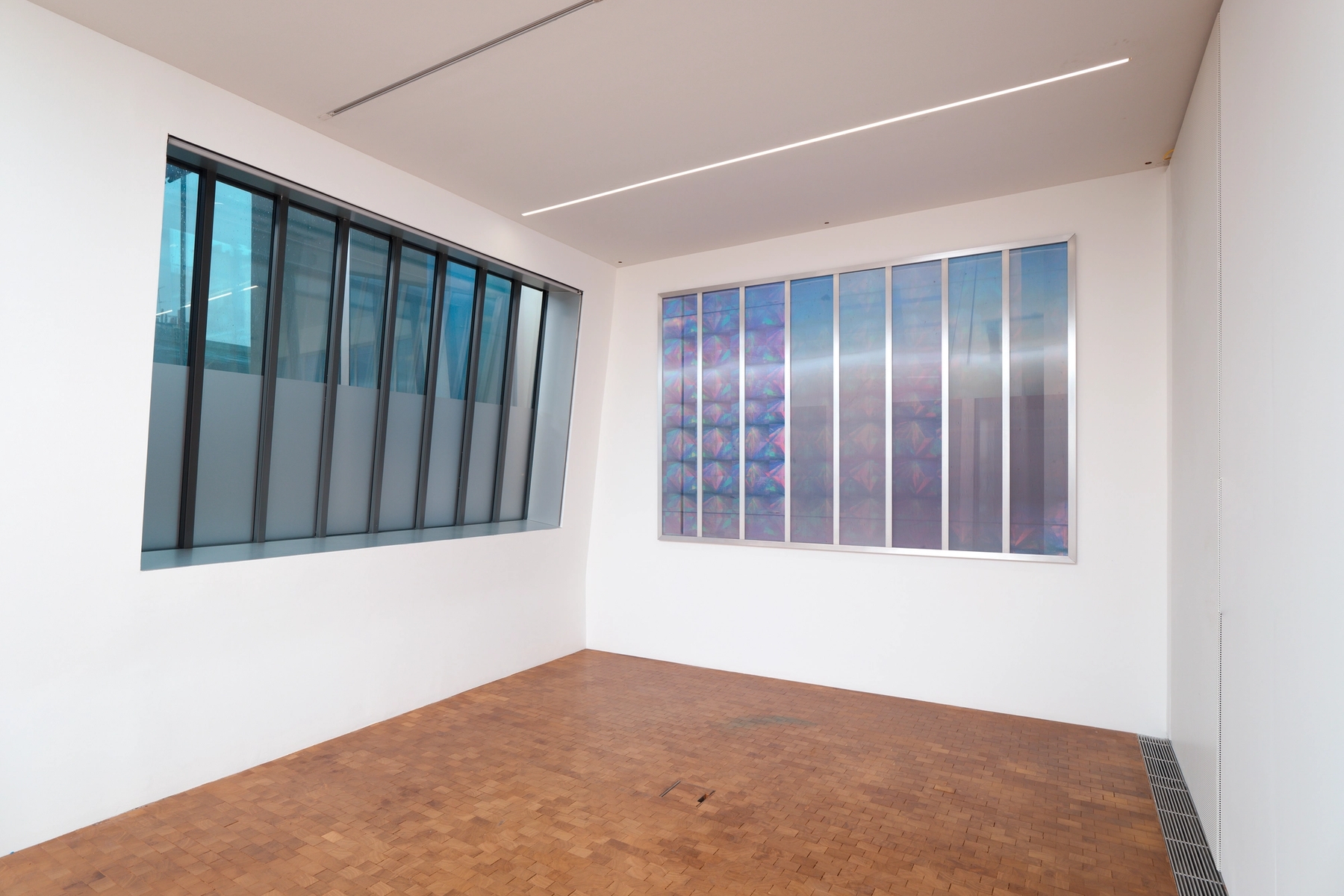
The Rem Koolhaus architecture is more disorienting the more time you spend in the building—so few right angles, so few perpendicular walls and floors, indirect light, so much shadow! The lenticular in particular, which draws from many dozens of photographs I made in the Lafayette Anticipations building in addition to images from New York, reflects the weird refractions, the spatial disorientation, the strange forms I found in the building. When we finalized the exhibition space last summer, I thought a lot about the viewer’s journey from one room to the next. I wanted the viewer to feel the movement from light and brightness into depth and back again. The curator Caroline Honorien described the movement between rooms as similar to the activity of an eclipse.
In thinking about the viewer’s role, how much do you want the audience to feel like they are navigating currents, versus being anchored or grounded?
This is such an interesting question. I love it when my work sparks new ideas in a viewer, invites them to make a new connection, inspires them to make something new.