Scene City is Róisín Tapponi’s World
Talent & novelist Róisín Tapponi
Interview Leonardo Orion Dal Colle
Photography Eimear Lynch
Creative direction Jeanne-Salomé Rochat
Fashion Patricia Villirillo
Makeup Kosei Kitada
Hair Mauko Nakae
Production The Production Factory London Ltd
Photography assistant Rita Fitton
Fashion assistants Swity Shinde, Beth Darroch & Sadie Wyer-Manock
Introduction Veronica Tlapanco Szabó
What might a fly on the wall of London’s lustrous contemporary art world witness? What lies beyond the smoke and mirrors? What happens to the gallerinas when the after-after-afters runs dry? Róisín Tapponi sheds some light on these interrogations in her debut novel, Scene City. Just released this month, Scene City is a scintillant read refracting identity politics, fashion, psychogeography and art history through its many facets, much like the multi-hyphenate creatives at the heart of the story. The London-based Irish-Iraqi novelist Tapponi delivers an honest portrayal of our generation and its vernacular in notable references to mogging and maxxing sprinkled throughout the text.
Scene City forgoes a linear plot in favour of capturing the journey of its protagonist, Romy, an art history student committed to her hedonistic and introspective pursuits in the ever-expansive city of London. As the world around her begins to fray at the edges, she finds solace in writing, a practice that keeps her grounded. Her writing soon expands into something grander, folding the lives of her friends into its own narrative fabric. Scene City is in a way deeply personal in its perspective, almost diaristic, while still lending space for self-identification—or simply just identification for those living in the city and orbiting the art scene.
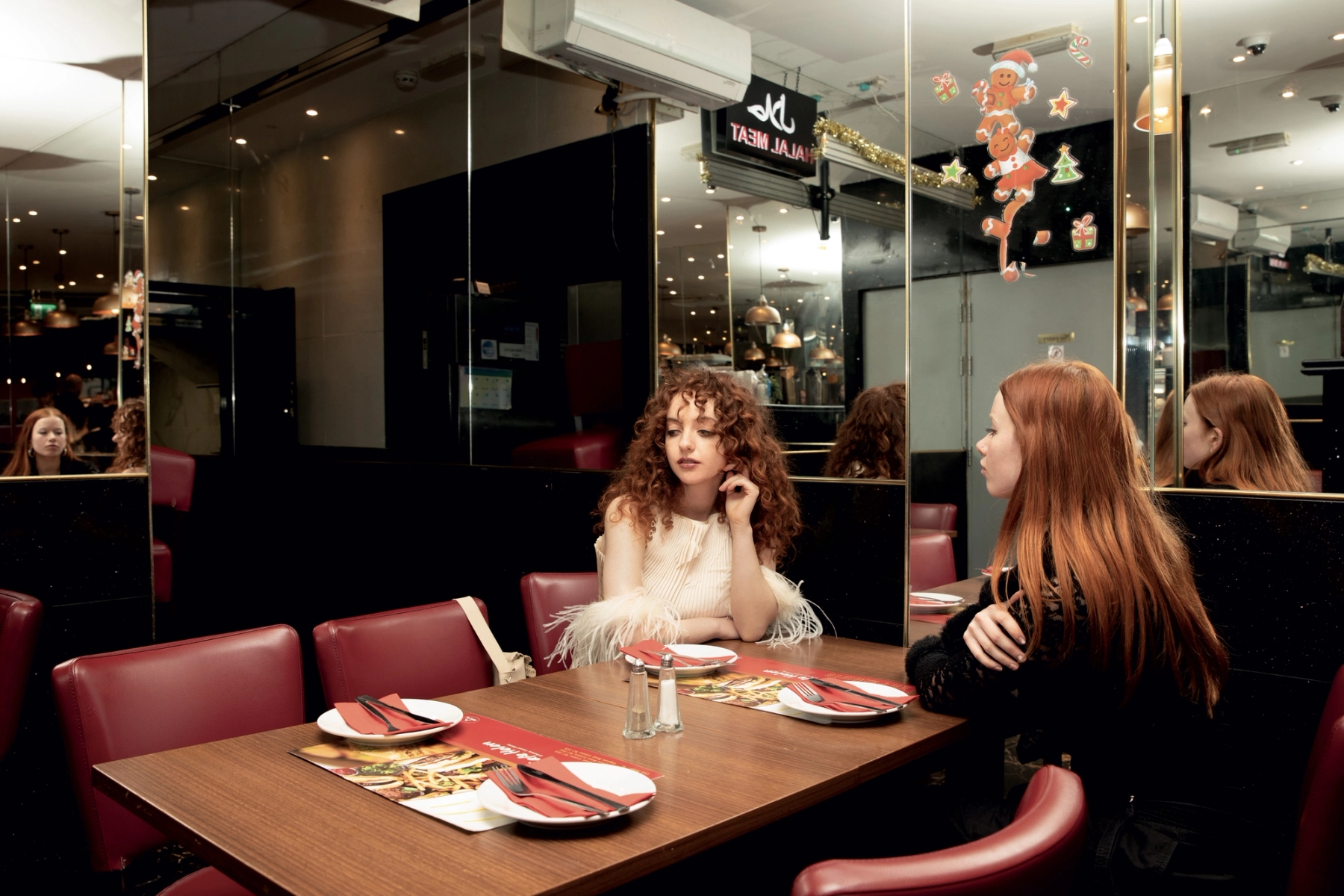
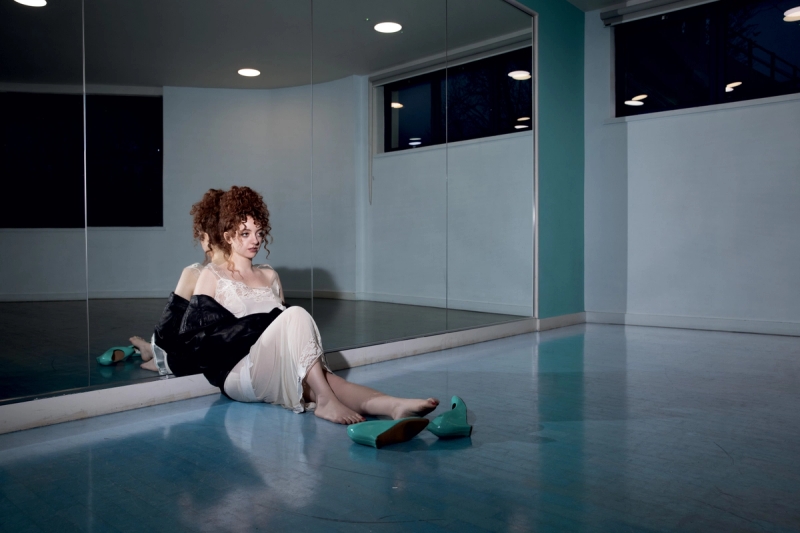
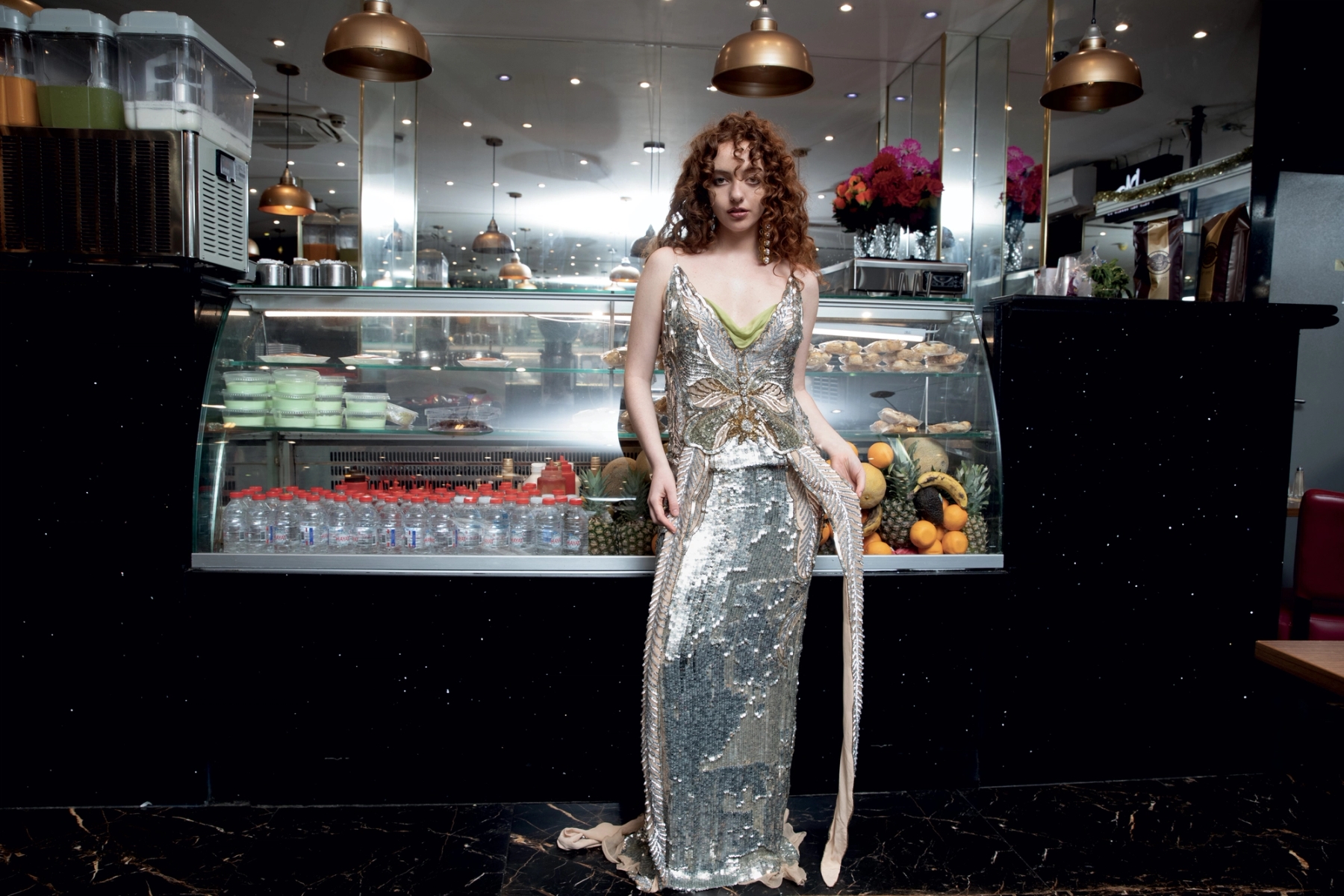
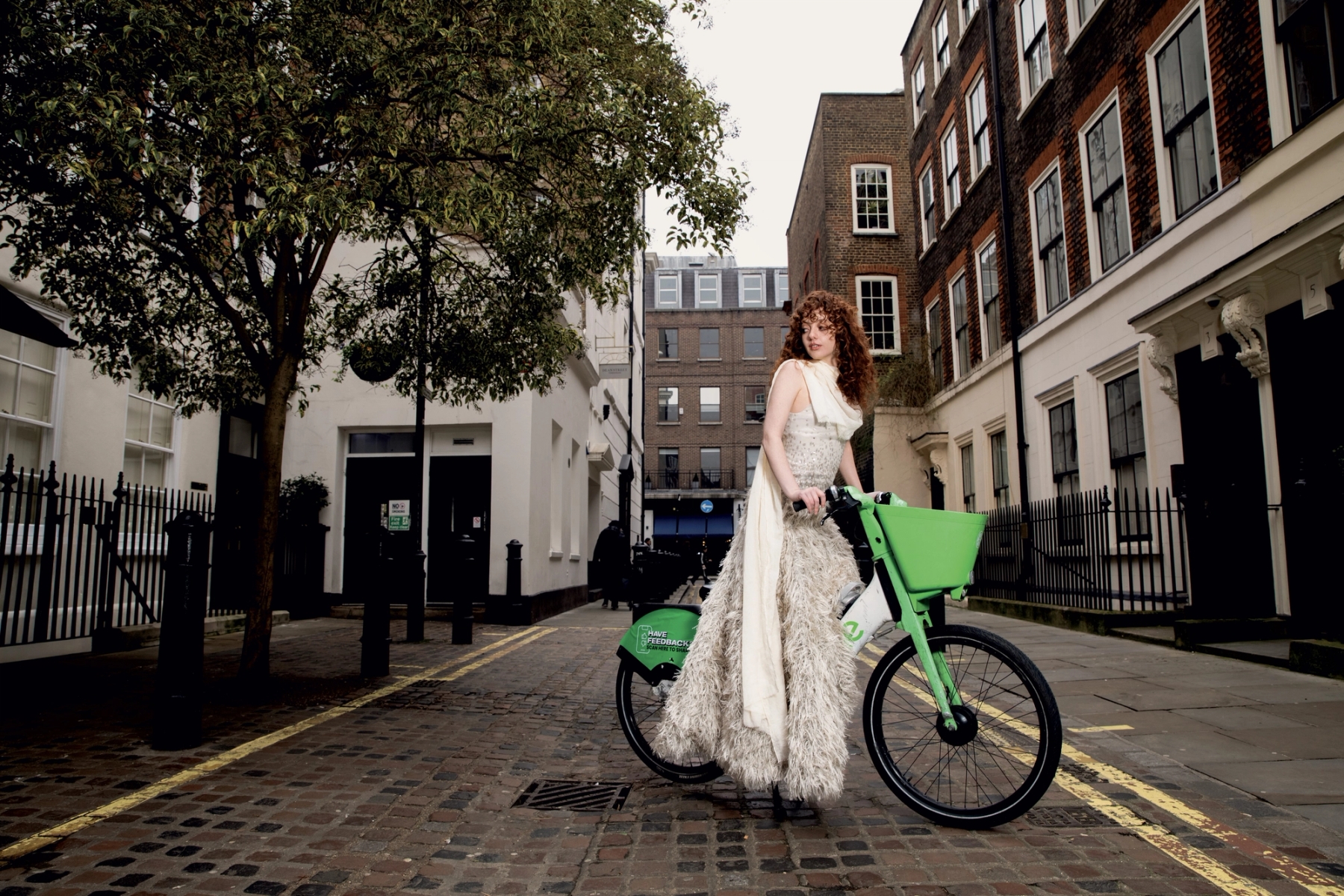
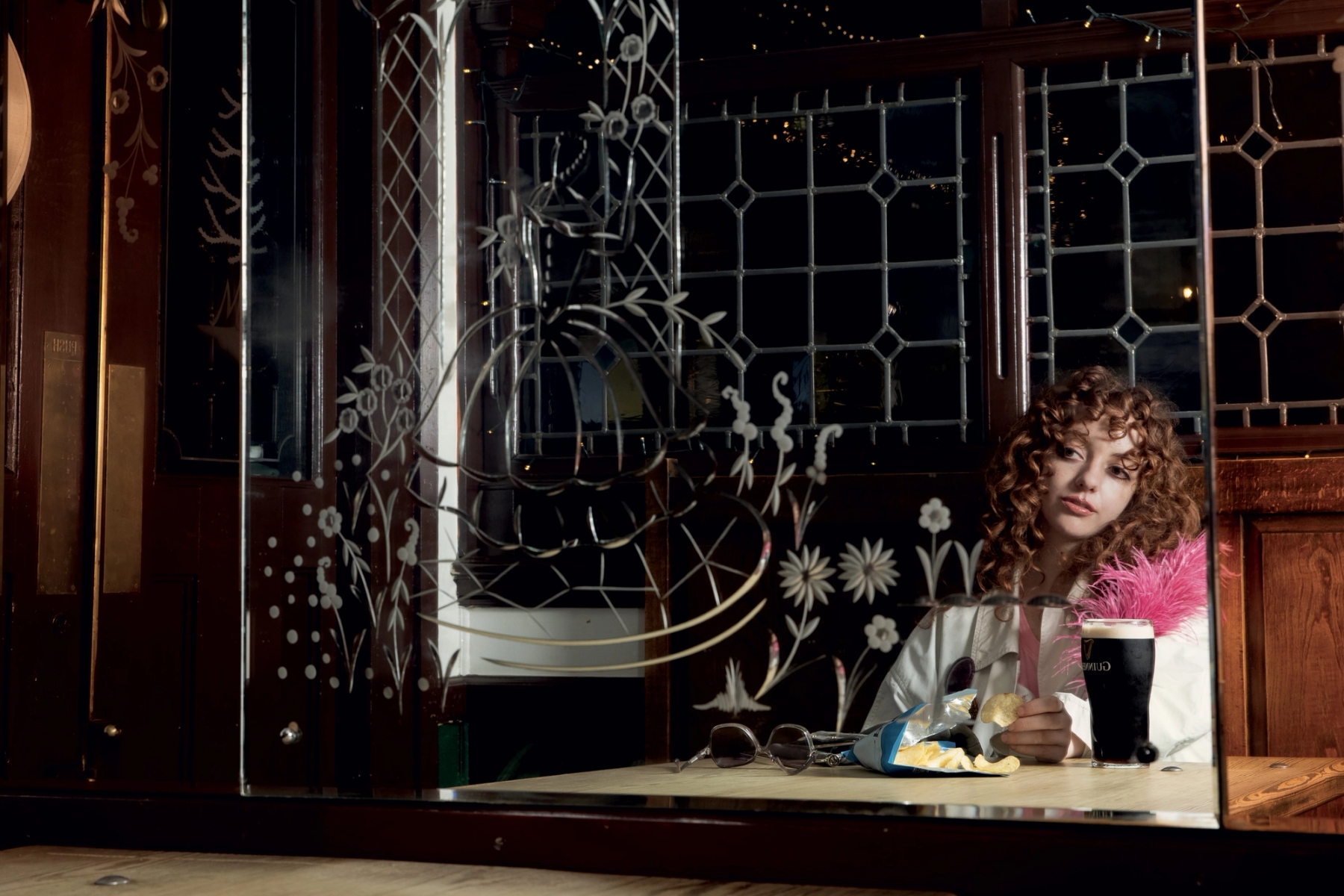
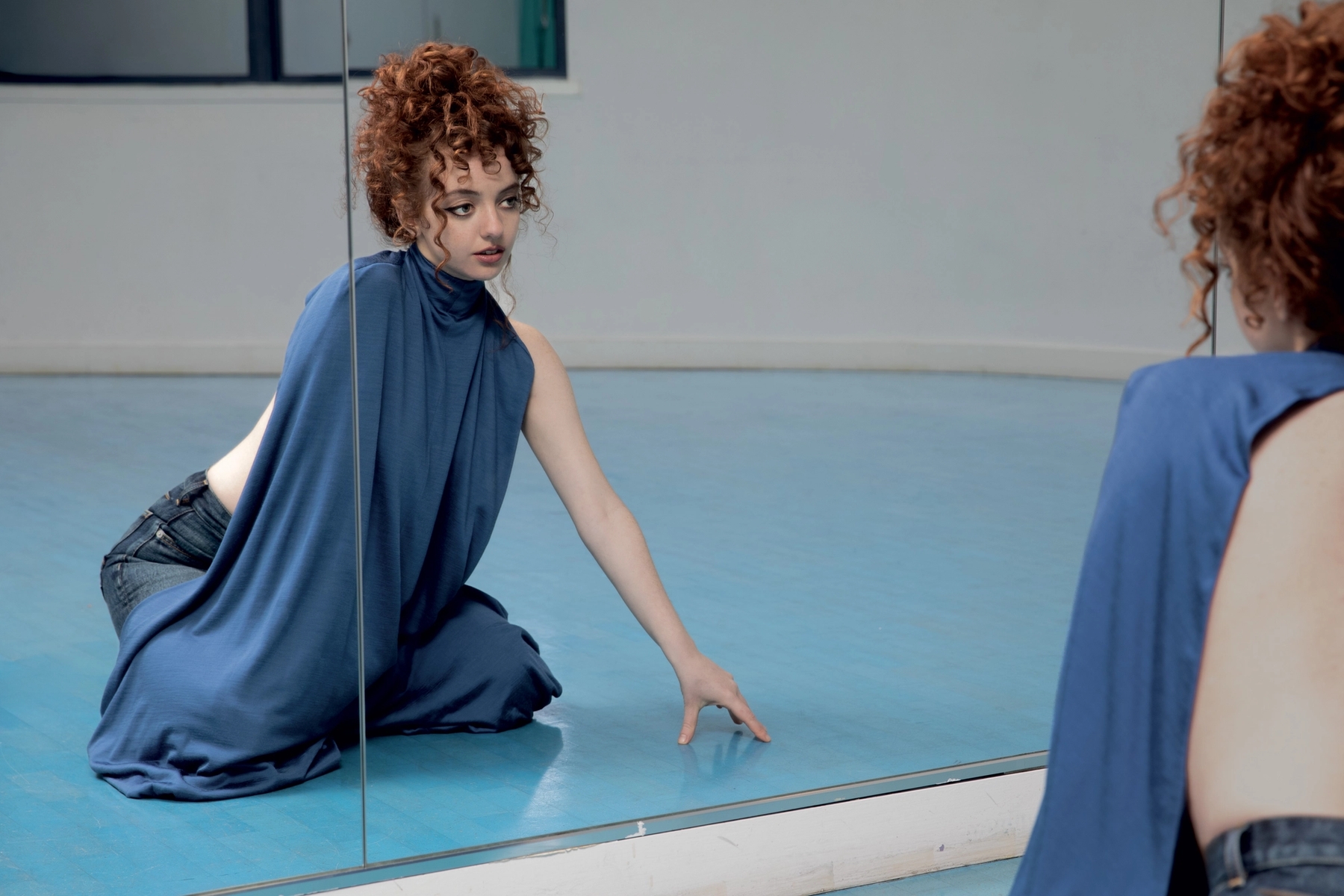
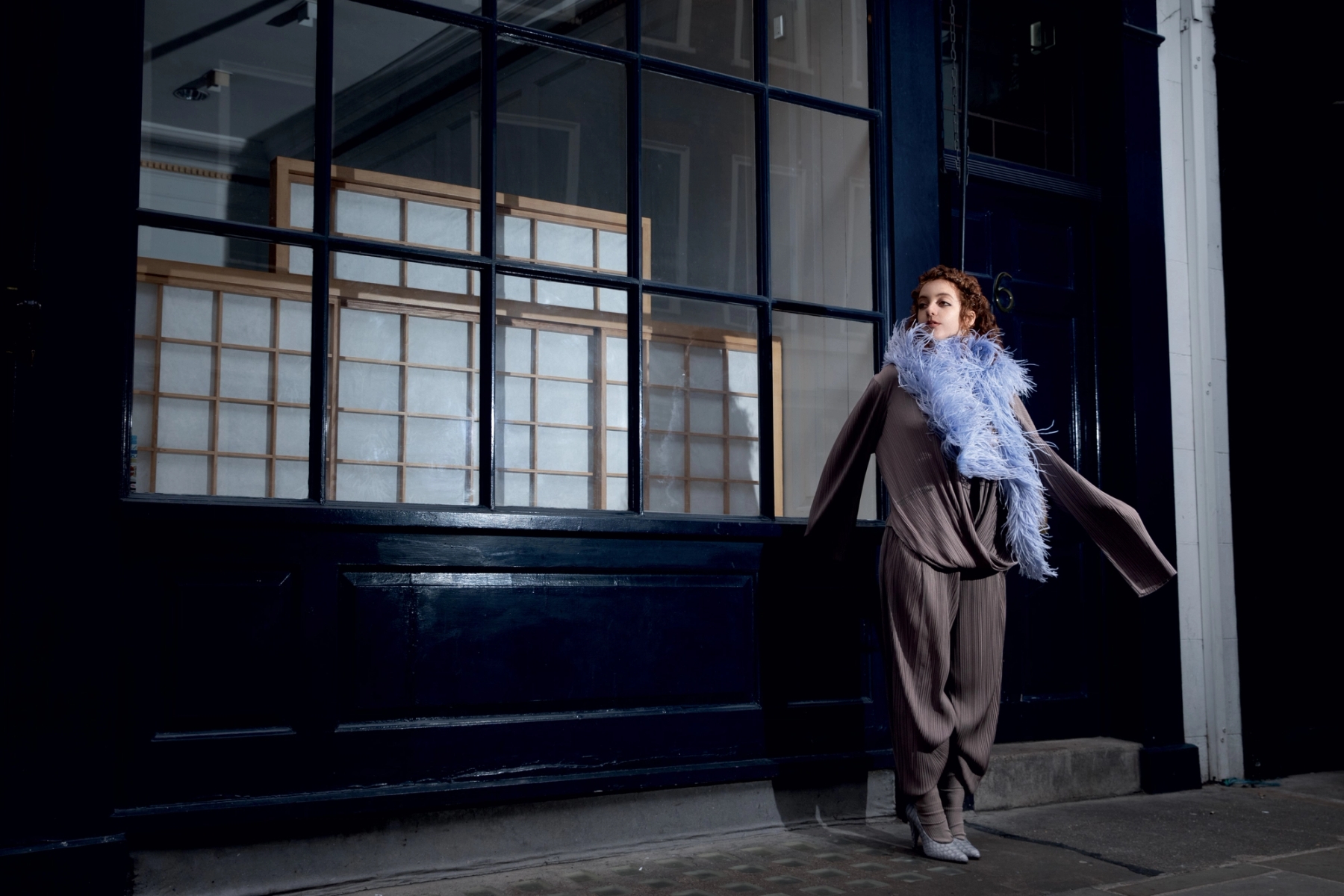
The boundary between fiction and reality was also probed in Eimear Lynch’s series for our Novembre 18 issue, where Róisín Tapponi lime bikes and dines in glitzy gowns. Moving through the city in a way that draws strong parallels to the world she has built for her protagonist. A world which is now further explored in a conversation between Róisín Tapponi and art curator Leonardo Orion Dal Colle, who together reflect on the novel’s treatment of time, the desire to be witnessed, mapping, amongst other topics… Together they discuss Romy’s attempts to reclaim the present through writing and how Scene City holds some of the contradictions that come with coming of age.
Róisín Tapponi: Is this my water or your water? No—don’t balance your phone on top of the glass, it will fall.
Leonardo Orion Dal Colle: It won’t... Okay, I’ll move it. That’s better. Are you happy?
Yeah.
I suppose we should start from the fact that I’ve purposefully left out the ending from my reading— like, the last page and a half.
Why?
Because I was too afraid it would inform every question that I had prepared. Once you have a complete picture of a novel, it changes the way you approach the beginning, the middle... It felt more important to reflect on my experience of reading.
Upon reading the last 10–15 pages, for example, I started to realise that the tempo you’ve infused throughout is sharp—so precise in relation to my experience of the world that Scene City inhabits.
The protagonist, Romy, becomes a narrator of her own life and, increasingly, of the lives of the people around her, who in turn become her fictionalised characters. With that said, I think every reader who is close to the references—whether to Romy’s childhood or to the life she’s living now —will find points of connection. The experience of Romy as a reader is both very narrowed and very expansive, which the book achieves in many ways, particularly through her self-aware act of fictionalisation.
I was interested in your approach to the concept of time in the novel, and how you positioned Romy in her day-to-day life. She exists very much in the present, but numerous descriptions suggest that she is aspiring to something beyond it. She seems to move ahead of her own life—faster than what she is able to realise in the present.
She only talks about her past as a way to pass the time. Literally—as a way of entertaining herself while her boyfriend, Caleb, is on the phone.
I think she’s aware that speaking about her past among her art world friends might create socially challenging situations, even a sense of alienation. Her surroundings are foreign to her lived experience.
Romy becomes concerned with her future, and we see her trying to figure it out. That’s why she undertakes the project of writing a novel. The transformation from protagonist into narrator gives her more authority. The people around her—her friends—begin to realise that they are characters in her novel too, and that something is unfolding beyond their control.
Because she’s taking notes all the time.
Yes. Note-taking is her way of reclaiming time, because, as far as she’s concerned, she’s wasting it in the present. It gives her life a sense of purpose. Then she takes it a step further and assumes responsibility for her future by writing a novel, which also provides structure to her experience of time. But the “entrapping” of her friends within the novel also gives her a form of creative authority over their lives, even as it remains an expression of her affection for them...
Something else I found particularly interesting is that she is constantly trying to grasp onto a routine. She’s self-directed in many ways, and self-sufficient to a certain extent as well—certainly more so than the other young people in the art world she’s surrounded by.
There’s also an inner monologue constantly present throughout the novel. The way you operate the shift between protagonist and narrator for Romy allows the reader to follow her closely, almost to the point of being absorbed by her.
This leads to moments of heightened tempo—there’s a real sense of speed in the novel—alternated with moments of suspension, almost like a vacuum of space that allows her to think.
I was wondering whether that texture of hollowness that surrounds her leads somewhere. Whether, towards the end, you are trying to introduce a sense of hope—that she might not remain the same indefinitely, that she could gain a different kind of control over her life.
Yeah, I mean, you’ve made a few interesting points.
Firstly, yes—Romy is very self-initiating. That’s what sets her apart. Because in her generation— Gen Z, our generation—there is an almost inescapable need for recognition or gratification whenever we do something. Whereas Romy is driven by her own curiosity and reasoning. She doesn’t need anyone to validate her.
But she still has a need to be witnessed. Instead of doing that through social media, she does it through her note-taking and writing. She witnesses her own life by writing a novel.
Secondly, regarding the inner monologue—it’s not a traditional one. I wouldn’t describe it as stream-of-consciousness in a Virginia Woolf sense, although it’s closer to that than much contemporary autofiction. Her inner monologue is observational rather than interior. It’s about how she sees the world—her lens.
Her interiority is revealed through her external observations. Through that, we come to understand her and her relationship to her surroundings.
And regarding your point about hollowness—I was very conscious of the reproducibility of experience, across novels and history. I was interested in finding meaning within that repetition.
When Romy arrives at some form of inner peace, it’s not through originality or a moment of transcendence. It comes from accepting the path she’s on and the person she is becoming. That’s what dissolves the sense of hollowness. And in any case, she’s not hollow—she’s a vessel of references.
Yes. That sense of wholeness becomes most tangible in moments in which the pace of everything around her quietly recedes.
Another compelling element is the idea of mapping—mapping the world through people, their emotional exchanges, their points of reference, the norms they follow, and the structures that hold them in place.
There’s a sense—similar to reading Balzac or Émile Zola—that life is fragile, that it doesn’t quite hold together. Everything feels porous, yet also somehow oriented towards emotional disappearance.
At a certain stage as a reader, I found my curiosity gradually intensifying, and I began to wonder whether observing these lives made you feel like both an emotionally invested and detached spectator.
Yes, absolutely. Even Romy is a somewhat disassociated spectator of her own world. She’s aware of being watched—in a way that echoes John Berger’s Ways of Seeing.
But also through contemporary forms of surveillance, and the generational need to be witnessed.
But she also reverses that dynamic—she becomes the one who observes.
There’s almost a cinematic quality to it. It feels like there’s both an external camera following her and an internal one shaping her perspective.
Exactly.
Writing becomes her way of reclaiming that gaze.
I was also thinking about her position as both observer and participant.
She’s always present, but not always fully participating. For example, she doesn’t take drugs, unlike her friends. She remains in control.
This becomes more complex when her friends realise she’s writing a novel—particularly Tom, who becomes self-conscious. Still, there is tenderness in these relationships.
But the distinction between private and public observation creates a certain tension—especially in a generation where identity is so curated.
Especially within the art world.
Exactly. It makes people uneasy.
I’d like to return to London. The way you map the city feels layered—historical and contemporary at once.
There’s even a moment towards the end where a list of real, emerging galleries slips in... Many of those places no longer exist, or endure in a different form.
Yes, and that reflects Romy’s tension—between her past and the world she inhabits now.
It’s spatial as much as psychological.
Exactly.
To me, what feels most empowering is the way she moves across different worlds and contradictions with a kind of ease that doesn’t resolve them but holds them in tension. She remains deliberately complex, resisting simplification, and in doing so allows herself to inhabit experience more fully, without narrowing it down or holding it at a distance.
Can you speak about my book at talks instead of me?
Maybe we should end on that.
Yeah.